

Entering Day 2 of the 2026 NFL Draft, it was hardly a secret that the New England Patriots would be eyeing an edge rusher. They entered that night holding pick No. 63 overall, near the end of the second round and made a trade up to No. 55 with the Chargers to land pass rusher Gabe Jacas of Illinois.
From a fan's perspective, it was nice to see the Patriots being aggressive, trading up for players in each of the first two rounds. They made a similar move on Day 1 for left tackle Caleb Lomu.
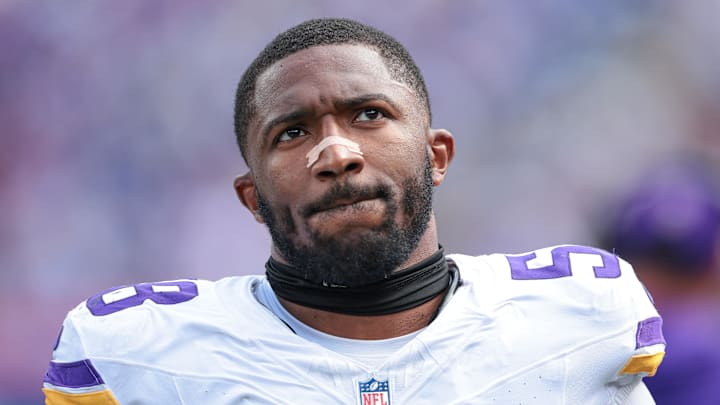
But did the Patriots make the right trade for a team now firmly in a wide-open Super Bowl window? Based on the Philadelphia Eagles’ blockbuster move with Minnesota for star edge defender Jonathan Greenard, that’s highly debatable (but not all that surprising).
The #Vikings have acquired a pair of 3rd-round picks from Philadelphia in exchange for OLB Jonathan Greenard and #244 overall in this year's draft. https://t.co/UxKXfkEjZH pic.twitter.com/TZuoej61Ao
— Minnesota Vikings (@Vikings) April 25, 2026
Why the Patriots passed on a win-now move that was there for the taking
Given how these two teams conduct business, the Patriots and Eagles are on the opposite ends of the spectrum when it comes to roster building. New England’s decision to trade up for Jacas and his cheap rookie contract, over making a move for an established veteran like Greenard, is classic Patriots. Philly giving up two third-round picks for Greenard, paired with a contract extension that will pay him $60 million in new money over the next two seasons? That's classic Howie Roseman.
The frustrating part on paper is that the Patriots easily could have done this deal.
They held No. 95 overall in this year’s third round, along with some extra Day 3 capital in 2027, including Chicago’s fifth-round pick from the Garrett Bradbury trade. The asking price for Minnesota was more than reasonable for a player entering his age-29 season who recorded 12-plus sacks in both 2023 and 2024 as a linchpin for Brian Flores' defense.
The Patriots most likely never called the Vikings over the cost — as in the real cash they would have added to their books both this year and in 2027. As part of his extension, the Eagles guaranteed the first two years of Greenard’s new contract while adding four void years, per Over the Cap, lowering his cap numbers to just $6.2 million in 2026 and $11.1 million in 2027. According to OTC, Philly can exit the contract in 2028 for $11 million in cap savings that year via a post-June 1 designation.
That’s Philadelphia’s way of doing business, though. Owner Jeffrey Lurie has been a firm believer in spending over the cap each year, and Roseman is the league’s gold standard in manipulating the cap with dummy years and other contract loopholes. The Patriots rarely take that approach. According to Spotrac, they’re projected to rank 26th in the NFL in total cash spending on player contracts in 2026. The Eagles rank No. 1 on that list.
The Krafts are obviously planning for a pair of mega-extensions for cornerback Christian Gonzalez (which could come as soon as this year) and quarterback Drake Maye (which is likely coming as soon as 2027). They’re almost certainly budgeting for a potential trade with the Eagles for wide receiver A.J. Brown, a move that’s widely expected to go down later in June to help Roseman do more of his typical cap gymnastics.
Could the Patriots have justified the draft capital for one of the NFL’s best pass rushers? Of course. They collected plenty of picks after moving on from veterans like Kyle Dugger and Keion White last year, and the price of two Day 2 picks was more than reasonable for what would have been an impact veteran addition.
Would the Patriots justify trading and extending Greenard over taking their chances on a second-round rookie in Jacas? Of course not.
Patriots fans are well conditioned to how their team typically does business during the core roster-building stages of the offseason. That doesn’t make second-guesses like the Greenard situation any less frustrating.
 Add us as a preferred source on Google